

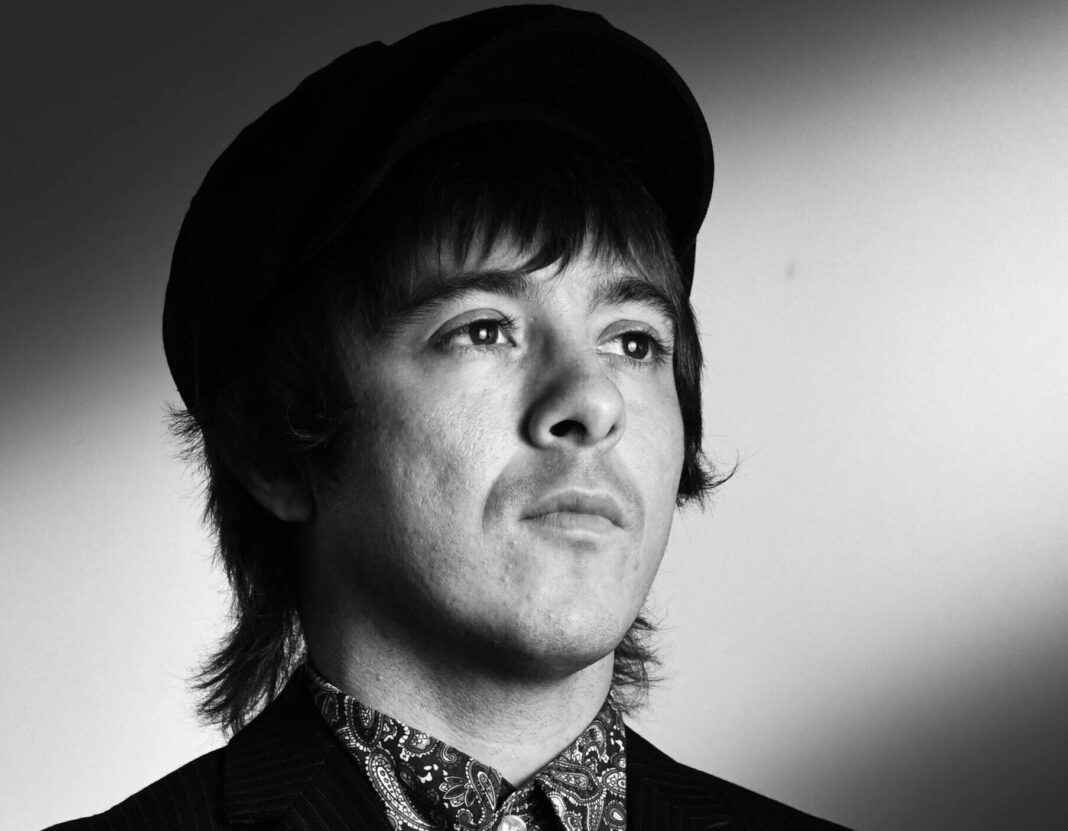
If anyone is shaping British rock’n’roll in the 2020s with a fresh, unmistakable energy, it’s Laurie Wright. The young singer and guitarist from the Midlands has been praised by legends like Liam Gallagher, Rod Stewart, and The Libertines as a “natural-born performer” and a “breath of fresh air for rock” — and rightly so.
Following his acclaimed debut album “Get On The End Of It” (2023) and the powerful follow-up “We’re Only Warming Up” (2024), Laurie Wright continues to captivate audiences with passionate live shows, honest songwriting, and a sound that feels both nostalgic and modern.
In February 2026, Laurie Wright and his band will return to Germany as part of THE POWER OF 3 EUROPEAN TOUR — with stops in Cologne (Artheater), Heidelberg (Karlstorbahnhof), and Berlin (Kantine am Berghain).
We spoke with Laurie about his musical roots, his love for performing live, and his vision for the future.
Laurie, you’re often called the “next big thing” in British rock – how do you deal with all the praise and expectations that come with that?
Publicly, It doesn’t affect me negatively. I enjoy praise, and If I didn’t want praise then I shouldn’t be making music. I know I’ve written 300+ good songs, 150+ of which are great, and to be recognised for that in my mind is no surprise, but in line with my ambitious expectations of myself. Where I would find it difficult (and where I have found difficulty in the past), is with writing and performing some of these very songs to empty rooms, falling on deaf ears. That was hard! The glory is not hard, it feels like vindication that all those hours, weeks, months, years, decades – the 10,000 hours of training were indeed worth it. I know that I want the glory, for if I didn’t then I wouldn’t be going for it. Where the glory causes problems is finding a balance within the real world, away from the stage etc. I’m often in isolation due to vocal rest & exhaustion – physically & mentally, retreating from everything and everyone, including friends and family, and dopamine seeking through screen time, nicotine, food, sex, love etc, where I used to seek solace in drugs and alcohol (Now 5 years clean and sober). So yes, it affects me negatively behind the scenes, but not in the pursuit of the music itself – that creative process and all that goes with it has always been and always will be my saving grace. I’m seeking therapy to try and strike more of a work/life balance, and I will continue to work on that until the balance is struck.
Your musical journey began on the streets of Camden. What lessons did you take from your time as a busker — both for life and the stage?
Rule #1. Don’t smoke crack/heroin: as a busker on any street, this is your office – You are at work, but particularly on the streets of Camden Town (or any other crazy neighbourhood), your colleagues are usually addicts, quite often more specifically homeless crack/heroin addicts. The danger with this being your daily place of work is that you naturally become friends with your colleagues, and spend more and more time around them – in my case normalising their behaviour and eventually adopting the same habits – more specifically a crack habit. My only saving grace from this time was that (out of a combination of fear and a general dislike for sleepy drugs) I never wanted to try heroin, as I don’t think I’d still be alive if I had. Most of my friends who succumbed to heroin are sadly either no longer with us, or probably won’t be for very much longer. Same rules apply for any drugs or any excessive (usually daytime) drinking – Don’t let the streets consume you.
Rule #2. ‘Think quids, get quids.’ Leave £1 & £2 coins in your case/box/hat, a fair few and nothing smaller. It will guilt trip the punter in to not giving you less than £1. Pocket any notes immediately as otherwise you’ll get robbed. With card readers, don’t get too greedy – you’ll make more money with a smaller donation tap option. I’d recommend £2/3, anything above that could be seen as getting cheeky and has a negative effect on final takings for the day. Yes you need to value yourself highly, but remember you are busking on a street corner, so context is important here.
Rule #3 ‘This is Wembley Stadium.’ It doesn’t matter that you’re on a street corner, you need to perform as if this is the biggest performance of your life. The average passer by is not easily impressed – we are all very cynical behind our eyes, and so you must perform as if your life depends on it. For me it literally does depend on it, for there is no plan b. While we’re at it, Get rid of plan b. plan b is an escape route to the easy life. Don’t choose the easy life, choose Wembley stadium.
Your sound recalls greats like The Kinks and The Small Faces, yet it feels fresh and modern. How do you find that balance between tradition and the present day?
I think that ‘traditional’ mainstream songwriting sensibilities are actually far more forward-thinking than ‘modern’ mainstream techniques, as the further you go back musically in the mainstream, the more complex is gets. And so I get bored with modern mainstream music and its overly simplistic themes & formulaic structure. A song is three things – melody, words and chords, and in my mind it has to be a combination of concise, catchy and clever. That’s the power of 3, and those three elements can contract within and between themselves. For instance, if the melody is not as catchy, then the lyrics must be twice as clever. If the structure is not concise then it has to be twice as catchy, and so on. I think that modern mainstream music is usually neither clever nor catchy, and therefore pointless to make concise, if devoid of any content in the first place. That’s my songwriting process, and living in a modern world, recording digitally whilst talking in the lyrics about my modern lived experience – that is what makes my music modern. Also I’m against making things sound too ‘retro’ in the studio. I think if it sounds or looks too much like the 1960s/70s then we’ve gone too far. ‘Let’s push things forward’ as Mike Skinner wisely once said. At the end of the day I am fundamentally a modernist, and so I’m naturally bringing modernism to the table, in every sense of the word.
Your new album “We’re Only Warming Up” feels more energetic and confident than your debut. What has changed for you since “Get On The End Of It”?
‘We’re Only Warming Up’ was definitely more confident than the debut ‘Get On The End Of It!’ on the back of the success of the first record, and being recently single and enjoying single life – I just made a mostly balls to the wall rock & roll record reflecting where I was at at that time. Life felt good, and so does the album! I have since released my 3rd album – ‘Power Of 3,’ which is a kind of mixture between the feelings of the first 2 records. It is 100% my best work yet, more considered and mature, less self certain perhaps, but more important.
There’s a strong storytelling element in your songs – are your lyrics autobiographical or inspired more by observation and fiction?
My lyrics are always 100% autobiographical. It gets me in to trouble sometimes! People I’ve met and been inspired by, people I’ve loved, people I’ve worried about, people I’ve disliked, situations I’ve found myself in, the music industry etc. it’s all lived experience – if I haven’t lived it, it’s not in there!
“Talk Of The Town” shows you experimenting with new influences. How important is musical evolution and surprise to you?
I believe that It’s important for me to push things forward, to test myself and my audience. For instance, There’s a ska song (Bambi Legs) with female lead vocal Lucca Mae on my new album ‘Power Of 3,’ and a reggae song (Rave Now On Your Way) with hip hop MC RUDI on the same album, which is about as far away from Rock & Roll as it gets, but ska & reggae are styles that I enjoy listening to and making, and therefore want represented on my records. On the contrary though I’m not completely reinventing the wheel, I love making rock & roll music and that is, for the most part where I intend to stay.
You’ve already toured with The Libertines and The Rifles. What experiences or lessons have you taken away from those tours?
I did 2 shows with The Libertines & The Rifles in 2024, 1 show with Ocean Colour Scene and 2 shows with Tom Meighan (kasabian) this year and they were all incredible! I have 2 shows with Babyshambles coming up in November. The important thing to remember when you’re the support act, is generally (like with the busking) as a rule of thumb, the audience don’t care yet who you are. They’re actually harder to please than the layman on the street because they’re seasoned music lovers who, more often than not, are used to lacklustre support acts. They’ve paid good money and are waiting, arms folded for the headline act. And so again the ‘Wembley stadium’ rule comes in to play. Give it your absolute all, 110% and no less. If you’re to unfold their arms in to rounds of applause you’ve really got to do something impressive!
In February 2026, you’ll be back in Germany for three shows. What can your German fans look forward to on this tour?
Chaos of the highest order! Rock & Roll, no less!
Is there a particular onstage moment that stands out to you – one that perhaps changed everything?
Winning over a sold out 3,000 crowd @ Birmingham Academy supporting The Libertines last year, whilst Peter Doherty was on the stage holding his Daughter, and the crowd were observing him observing me and back to the crowd. That was a ‘made it’ moment for me. Of course I was only the support act, but it was a magical moment for sure. That and sharing a microphone with him singing ‘Don’t Look Back In To The Sun’ the following night on the tour. That was the song that made me want to make music, and so to sing it with him – other worldly, words cannot describe how that felt.
Finally – where do you see yourself in five years, and what do you hope to achieve with your music?
Headlining Wembley Stadium & Glastonbury Festival. Give me five years and it’s on. I want to turn the tables so that interesting music is once again topping the charts, and I will do that. I want to inspire future generations to want to make music that matters, and once again, I will do that.
Thank You, Laurie Wright!
A huge thank you to Laurie Wright for this open and inspiring conversation! It’s always a pleasure to speak with artists who live their passion so fearlessly and authentically. We wish you and your band all the best for the upcoming “THE POWER OF 3 EUROPEAN TOUR” and continued success on your musical journey — see you in Germany in 2026! 🇩🇪🎶
Interview by CK
EVENTIM Ticketshop
LAURIE WRIGHT
THE POWER OF 3 EUROPEAN TOUR
Presented by Live Nation
DE
Laurie Wright: Der neue Herzschlag des britischen Rock’n’Roll
Wenn jemand den britischen Rock’n’Roll der 2020er-Jahre mit frischer, unverwechselbarer Energie prägt, dann ist es Laurie Wright. Der junge Sänger und Gitarrist aus den Midlands wird von Legenden wie Liam Gallagher, Rod Stewart und The Libertines als „geborener Performer“ und „frischer Wind für den Rock“ gefeiert – und das völlig zu Recht.
Nach seinem gefeierten Debütalbum „Get On The End Of It“ (2023) und dem energiegeladenen Nachfolger „We’re Only Warming Up“ (2024) begeistert Laurie Wright weiterhin mit leidenschaftlichen Live-Shows, ehrlichem Songwriting und einem Sound, der zugleich nostalgisch und modern wirkt.
Im Februar 2026 kehren Laurie Wright und seine Band im Rahmen der THE POWER OF 3 EUROPEAN TOUR nach Deutschland zurück – mit Stopps in Köln (Artheater), Heidelberg (Karlstorbahnhof) und Berlin (Kantine am Berghain).
Wir haben mit Laurie über seine musikalischen Wurzeln, seine Liebe zur Bühne und seine Vision für die Zukunft gesprochen.
Laurie, du wirst oft als das „nächste große Ding“ im britischen Rock bezeichnet – wie gehst du mit all dem Lob und den Erwartungen um?
Öffentlich gesehen wirkt sich das nicht negativ auf mich aus. Ich freue mich über Lob – und wenn ich das nicht wollte, sollte ich keine Musik machen. Ich weiß, dass ich über 300 gute Songs geschrieben habe, mehr als 150 davon großartig – also überrascht mich die Anerkennung nicht, sondern entspricht meinen eigenen ehrgeizigen Erwartungen.
Schwieriger war und ist es, manche dieser Songs vor leeren Räumen zu spielen – wenn niemand zuhört. Das war hart! Der Ruhm ist dagegen nicht schwer zu ertragen – er fühlt sich wie eine Bestätigung an, dass all die Stunden, Wochen, Monate, Jahre, Jahrzehnte – die 10.000 Stunden Training – sich gelohnt haben.
Ich weiß, dass ich den Ruhm will, denn sonst würde ich ihn nicht anstreben. Das Schwierige ist, ein Gleichgewicht im echten Leben zu finden – abseits der Bühne. Oft bin ich isoliert, wegen Stimmerholung oder Erschöpfung – körperlich und mental – und ziehe mich von allem und jedem zurück, auch von Freunden und Familie. Dann suche ich Ablenkung über Bildschirmzeit, Nikotin, Essen, Sex, Liebe usw., wo ich früher Trost in Drogen und Alkohol gesucht habe (ich bin jetzt seit fünf Jahren clean und nüchtern).
Also ja – hinter den Kulissen hat es negative Seiten, aber nicht im kreativen Prozess selbst. Musik bleibt meine Rettung. Ich mache derzeit eine Therapie, um eine bessere Work-Life-Balance zu finden – und arbeite daran, bis ich sie erreicht habe.
Deine musikalische Reise begann auf den Straßen von Camden. Welche Lektionen hast du aus deiner Zeit als Straßenmusiker gelernt – fürs Leben und für die Bühne?
Regel Nr. 1: Nimm kein Crack oder Heroin.
Als Straßenmusiker ist die Straße dein Büro – du bist bei der Arbeit. In Camden Town (oder jedem anderen wilden Viertel) sind deine „Kollegen“ oft Süchtige, meist obdachlose Crack- oder Heroinabhängige. Die Gefahr ist, dass man mit ihnen befreundet wird, ihr Verhalten normalisiert – und ihre Gewohnheiten übernimmt. Genau das ist mir passiert – ich entwickelte eine Crack-Abhängigkeit.
Meine Rettung war, dass ich (aus Angst und Abneigung gegen „schläfrige“ Drogen) nie Heroin ausprobiert habe – sonst wäre ich heute wohl nicht mehr am Leben. Viele meiner Freunde, die dem Heroin verfallen sind, leben leider nicht mehr – oder werden es bald nicht mehr tun. Gleiches gilt für andere Drogen oder exzessives Trinken – lass dich nicht von der Straße verschlingen.
Regel Nr. 2: „Denk in Pfundstücken, verdien Pfundstücke.“
Lass ein paar 1- und 2-Pfund-Münzen in deiner Gitarrentasche – keine kleineren Beträge. Das erzeugt beim Publikum ein schlechtes Gewissen, weniger zu geben. Scheine solltest du sofort einstecken – sonst wirst du bestohlen. Beim Kartenleser: lieber kleine Beträge anbieten (2–3 £), sonst wirkt es unverschämt und du verdienst am Ende weniger. Wertschätze dich selbst – aber bleib realistisch: du stehst auf der Straße.
Regel Nr. 3: „Das ist Wembley Stadium.“
Egal, ob du auf einer Straßenecke stehst – spiel, als wäre es dein größter Auftritt! Passanten sind schwer zu beeindrucken; wir alle sind hinter den Augen zynisch. Also spiel, als hinge dein Leben davon ab – für mich tut es das tatsächlich. Es gibt keinen Plan B. Und genau deshalb: Schaff dir keinen Plan B! Der ist nur der Fluchtweg ins bequeme Leben. Entscheide dich lieber für Wembley Stadium.
Dein Sound erinnert an The Kinks und The Small Faces, wirkt aber trotzdem frisch. Wie findest du das Gleichgewicht zwischen Tradition und Gegenwart?
Ich glaube, dass traditionelles Songwriting im Mainstream eigentlich viel fortschrittlicher ist als viele moderne Techniken. Je weiter man musikalisch zurückgeht, desto komplexer wird es. Moderne Mainstream-Musik langweilt mich oft – sie ist zu einfach, zu formelhaft.
Ein Song besteht aus Melodie, Text und Akkorden – für mich muss er prägnant, eingängig und clever sein. Das ist meine „Power of 3“. Wenn die Melodie nicht so eingängig ist, müssen die Texte doppelt so schlau sein – und umgekehrt.
Moderne Popmusik ist oft weder clever noch eingängig – also wozu dann überhaupt kurz und knapp? Ich lebe in einer modernen Welt, nehme digital auf, schreibe über mein heutiges Leben – das macht meine Musik modern.
Ich vermeide es auch, Songs zu „retro“ klingen zu lassen. Wenn es zu sehr nach 60er/70er klingt, ist es zu weit gegangen. Wie Mike Skinner sagte: „Let’s push things forward.“ Ich bin im Kern ein Modernist – und bringe diese Haltung in alles ein, was ich tue.
Dein neues Album „We’re Only Warming Up“ wirkt energiegeladener und selbstbewusster als dein Debüt. Was hat sich verändert?
„We’re Only Warming Up“ war definitiv selbstbewusster als „Get On The End Of It“ – durch den Erfolg des ersten Albums und weil ich damals gerade Single war und das Leben genoss. Es ist ein reines Rock’n’Roll-Album, das genau dieses Lebensgefühl widerspiegelt.
Inzwischen habe ich mein drittes Album „Power Of 3“ veröffentlicht – eine Mischung aus den Gefühlen der ersten beiden. Es ist mein bisher bestes Werk: durchdachter, reifer, weniger selbstsicher vielleicht, aber bedeutungsvoller.
In deinen Songs steckt oft starkes Storytelling – sind deine Texte autobiografisch oder eher fiktiv?
Meine Texte sind immer 100 % autobiografisch. Das bringt mich manchmal in Schwierigkeiten! Sie handeln von Menschen, die ich getroffen habe, geliebt habe, über die ich mir Sorgen gemacht oder die ich nicht mochte – und von Situationen, in denen ich mich befand. Alles ist gelebte Erfahrung. Wenn ich es nicht erlebt habe, steht es auch nicht im Song.
Mit „Talk Of The Town“ experimentierst du mit neuen Einflüssen. Wie wichtig sind dir Entwicklung und Überraschung?
Ich finde es wichtig, mich selbst und mein Publikum herauszufordern. Auf meinem neuen Album „Power Of 3“ gibt es z. B. einen Ska-Song („Bambi Legs“) mit Sängerin Lucca Mae und einen Reggae-Track („Rave Now On Your Way“) mit dem Hip-Hop-MC RUDI – also ziemlich weit weg vom klassischen Rock’n’Roll. Aber ich liebe diese Stile und möchte, dass sie auf meinen Alben vorkommen. Trotzdem bleibe ich im Kern dem Rock’n’Roll treu – da fühle ich mich zu Hause.
Du hast bereits mit The Libertines und The Rifles getourt. Was hast du aus diesen Erfahrungen mitgenommen?
Ich habe 2024 zwei Shows mit The Libertines und The Rifles, eine mit Ocean Colour Scene und zwei mit Tom Meighan (Kasabian) gespielt – alle waren fantastisch! Im November folgen zwei Shows mit Babyshambles.
Wichtig ist: Als Support-Act interessiert sich das Publikum anfangs nicht für dich. Sie warten auf den Headliner, oft mit verschränkten Armen. Da greift wieder die „Wembley-Regel“: Gib alles, 110 %! Wenn du es schaffst, dass sie ihre Arme lösen und applaudieren – dann hast du wirklich etwas erreicht.
Im Februar 2026 kommst du für drei Shows nach Deutschland. Worauf dürfen sich deine deutschen Fans freuen?
Auf Chaos allerhöchster Ordnung!
Rock’n’Roll – nicht weniger!
Gibt es einen Bühnenmoment, der für dich alles verändert hat?
Definitiv – als ich 2024 The Libertines im ausverkauften Birmingham Academy (3.000 Zuschauer) supportet habe. Peter Doherty stand auf der Bühne, hielt seine Tochter im Arm, das Publikum beobachtete ihn, mich – und wieder zurück. Ein magischer Moment!
Am nächsten Abend sangen wir gemeinsam „Don’t Look Back Into The Sun“ – der Song, der mich überhaupt erst dazu brachte, Musik zu machen. Mit ihm zusammen zu singen – unbeschreiblich, fast surreal.
Wo siehst du dich in fünf Jahren – und was möchtest du mit deiner Musik erreichen?
Ich sehe mich als Headliner in Wembley Stadium und auf dem Glastonbury Festival. Gib mir fünf Jahre – und es passiert.
Ich will, dass interessante Musik wieder die Charts anführt, und ich werde genau das tun. Ich will zukünftige Generationen inspirieren, Musik zu machen, die etwas bedeutet – und auch das werde ich schaffen.
Danke, Laurie Wright!
Ein riesiges Dankeschön an Laurie Wright für dieses offene und inspirierende Gespräch! Es ist immer eine Freude, mit Künstlern zu sprechen, die ihre Leidenschaft so furchtlos und authentisch leben.
Wir wünschen dir und deiner Band alles Gute für die bevorstehende „THE POWER OF 3 EUROPEAN TOUR“ und weiterhin viel Erfolg auf eurer musikalischen Reise – wir sehen uns 2026 in Deutschland! 🇩🇪🎶
Interview von CK
EVENTIM Ticketshop
LAURIE WRIGHT
THE POWER OF 3 EUROPEAN TOUR
Presented by Live Nation