

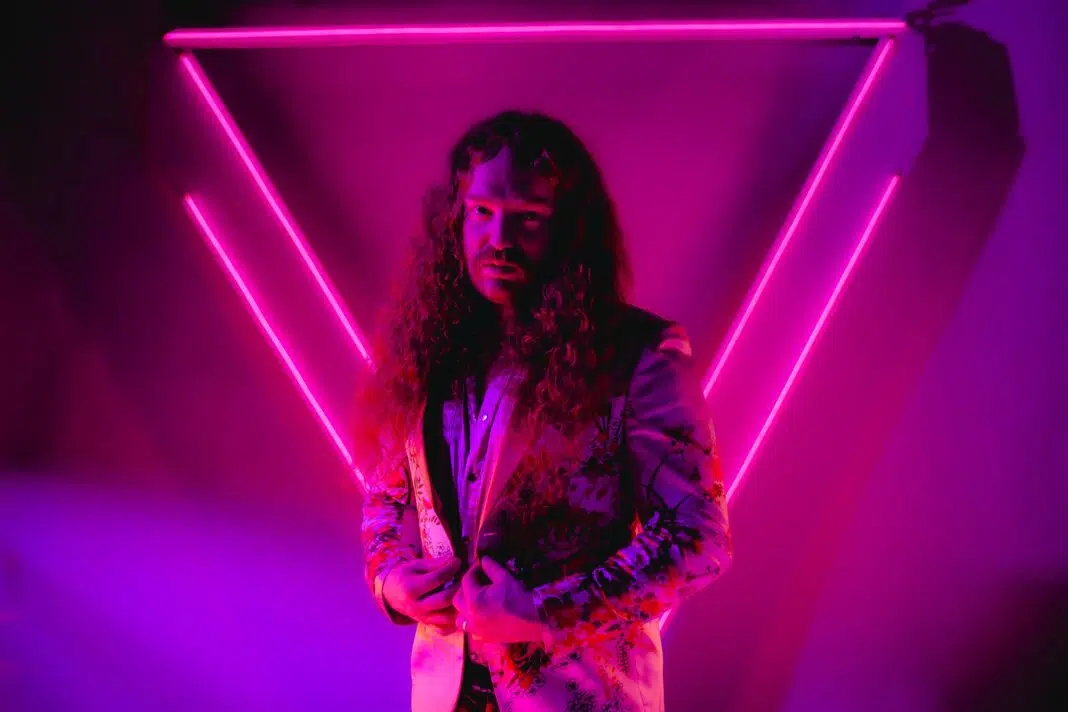

🎸An interview with Jeremy Lyon about the conclusion of the Glory Daze trilogy and the soundtrack of a life.
1. Jeremy, congratulations on completing the Glory Daze trilogy! What does this final chapter, Glory Daze VI, mean to you personally?
Thank you! Honestly, it’s a bit of a relief. This trilogy started as a 4 song EP back in 2020 so it’s been a 5 year process. So much in life has changed – the people, the places, the homes, the love. These records are a great way to collect and honor such a happy time in my life. There were many times when it seemed silly or stupid to continue working on and releasing all of this music but I’m glad I proved it to myself that I could finish it and felt like I owed it to the songs and the people who contributed to them for it all to be released.
2. The trilogy consists of a total of 24 songs. Why did you decide to split it into three parts – and why Vol. IV through VI specifically?
These are my fourth through sixth albums if you factor in the two albums from my old band Tumbleweed Wanderers. This was a nod to the thread and continuity of that project, as well as a reference to the original Star Wars trilogy.
I split the records by genre / vibe. Until “Glory Daze” each of my albums were sort of “journey” records in that each song was totally different from the previous one and you never knew what to expect. I love that as a listener but it can also be hard to know what you’re getting into when the vibe keeps changing on you. I’ve always branched out in three directions at a time: anthemic rock and roll (IV), psychedelic soul (V), and cinematic folk (VI). Rather than cram that into one record, I split it into three.
3. You’ve described Glory Daze as a body of work that evolved over many years. How has your perspective on the older songs changed now that they’ve finally been released?
Some of the songs on VI are actually the oldest songs in my catalog. I wrote “How Did We Get Here?” and “Vegas to Zion” back in 2016. “School Kids” I wrote back in 2013 when I was still in my old band. I tried recording “Well Wishes” for the first King Dream album but I didn’t get the performance right. I held on to these songs for a long time as they were more vulnerable, not really the high octane rock and roll that translates at shows. It feels as though these songs were waiting for me to grow into them. Somehow they ended up coming out right on time.
4. Many tracks on Glory Daze VI feel very intimate and emotional. How difficult was it to revisit these deeply personal songs after all this time?
The cuts on this record that I wrote back in 2016 were all breakup songs. My girlfriend at the time and I broke up. Then my old band broke up. Then my girlfriend and I got back together and eventually married. Then we got divorced just before I put this record out. So it was weird that I had this sort of breakup album from the last go around on the shelf ready to go when my personal life fell apart again.
5. The album blends bedroom R&B with psychedelic rock – an unusual but remarkably cohesive combination. How did that sound come about?
I was really into Childish Gambino and Tame Impala at the time and if you go to a big festival or listen to “Redbone” and “Currents” back to back it makes perfect sense. I think the genres have actually been coming closer together. Recording at home during lockdown allowed for more experimentation outside of the traditional live rock band lineup as I’ve done in professional studios. I started working with loops on some songs and sending tracks to my collaborators where they had more time to develop their parts. Once you can record and mix all night it’s easy to go down the bedroom psychedelia rabbit holes that standard working hours rarely offer.
6. You recorded and produced the album, at least in part, in your own home studio. What freedoms – and challenges – come with having full creative control?
There’s less friction when it’s just you, as no one else has the same skin in the game, so to speak. On the other hand, that level of shared ownership also can result in great collaboration and the whole being greater than the sum of its parts. When one has full creative control you can see deeper into their soul, and so much of art is connection. It’s on your own schedule, which is a blessing and a curse. You have to keep prioritizing yourself in order to finish, which can be hard to do when you need to take on other work to survive. I recommend doing it at some point, you have to find out how far you can follow your creativity, and you’ll have more to offer as a collaborator once you’ve done so.
7. Your 2025 European tour was your third – and it just wrapped up in Frankfurt. How did this tour feel for you, and what was the most memorable moment on the road?
We spent most of this tour in Czech Republic. The German leg of the tour fell through at the last minute, which was stressful, but Czechia really pulled through for us and made it an incredibly enjoyable trip. The most memorable moment as a band was in Tisa hiking up these 100 million year old rocks. We got to the top of the mountain and got caught in a flash thunderstorm. We were instantly drenched to the bone. We climbed down a staircase in a raging river up to our knees. None of us had been that soaked before in our lives. We got back to the restaurant we’d played at the night before Kacak and jumped in the pond with all our clothes on.
8. Many of your songs sound like soundtracks for late-night road trips. You once said, “I make driving records.” Where would Glory Daze VI be best listened to, in your opinion?
“Glory Daze VI” is for golden hour on the coast on your way back from the festival. It’s for reflection, after all the shenanigans and excitement of the night before. Maybe you felt like you’d turned a corner but on your way back home everything you thought you’d moved past is still there waiting for you and you’ve still gotta sit with it. I guess it’s a comedown record, haha!
9. Your music often feels like a reflection of inner change – growth, upheaval, new beginnings. What comes after the ‘Glory Daze’?
The actual divorce album! Haha… I went through a lot of turmoil in the past year, in terms of relationships, family, friends, and my living situation, and writing helped me process what was happening to me and around me. I’ve had this Tascam 388 tape machine for a decade and while I’ve used it for tracks here and there I’ve never committed to a full album on it until now.
10. And finally: Looking back on the last few years, what have you learned about yourself while writing and recording this trilogy?
I have a deeper well of love, empathy, and compassion than I realized. Through these records, through everything else that went on around me. I never took compliments to heart for fear that it would go to my head and over the course of the last year I realized that was dumb. Accept kind words, accept help from those that love you. I’ve proved whatever I needed to prove to myself over this sprawling triple album and now I can hone in and strip back all the layers and striving to emulate records I love and whatever is still left is unique to me.
A huge thank-you to Jeremy Lyon of King Dream for this open, honest, and insightful conversation – and of course, for taking the time to speak with us. We wish you continued success, creative freedom, and good energy for everything ahead.
We’re already looking forward to your next visit to Germany – the door is always open! 🇩🇪🎶
DE
„Zwischen Vegas und Zion – King Dream über Herzschmerz, Heimstudio und die letzte große Fahrt“
🎸Ein Interview mit Jeremy Lyon über das Ende der Glory Daze-Trilogie und den Soundtrack fürs Leben
1. Jeremy, herzlichen Glückwunsch zum Abschluss der Glory Daze-Trilogie! Was bedeutet dir dieses letzte Kapitel, Glory Daze VI, persönlich?
Vielen Dank! Ehrlich gesagt ist es eine gewisse Erleichterung. Diese Trilogie begann 2020 als eine 4-Track-EP – also ist das jetzt ein Prozess von fünf Jahren. So viel hat sich im Leben verändert – Menschen, Orte, Zuhause, die Liebe. Diese Alben sind eine wunderbare Möglichkeit, eine glückliche Zeit meines Lebens zu sammeln und zu würdigen. Es gab viele Momente, in denen es albern oder sinnlos erschien, weiter an dieser Musik zu arbeiten und sie zu veröffentlichen, aber ich bin froh, dass ich mir selbst bewiesen habe, dass ich es durchziehen konnte. Und ich hatte auch das Gefühl, dass ich es den Songs und den Menschen, die daran mitgewirkt haben, schuldig war, alles zu veröffentlichen.
2. Die Trilogie besteht insgesamt aus 24 Songs. Warum hast du dich entschieden, sie in drei Teile aufzuteilen – und warum gerade Vol. IV bis VI?
Wenn man die zwei Alben meiner früheren Band Tumbleweed Wanderers mitzählt, sind das meine vierten bis sechsten Alben. Die Nummerierung ist also eine kleine Verbeugung vor der Kontinuität dieses Projekts – und eine Anspielung auf die originale Star Wars-Trilogie.
Ich habe die Alben nach Genre bzw. Stimmung aufgeteilt. Bis Glory Daze waren meine Alben eher „Reiseplatten“, bei denen jeder Song völlig anders war als der vorherige – man wusste nie, was einen erwartet. Das liebe ich als Hörer, aber es kann auch verwirrend sein. Ich habe mich musikalisch immer in drei Richtungen bewegt: hymnischer Rock (IV), psychedelischer Soul (V) und cineastischer Folk (VI). Statt alles auf ein Album zu pressen, habe ich es also aufgeteilt.
3. Du hast Glory Daze als Werk beschrieben, das sich über viele Jahre entwickelt hat. Wie hat sich deine Sicht auf die älteren Songs verändert, jetzt wo sie endlich veröffentlicht sind?
Einige der Songs auf VI sind tatsächlich die ältesten, die ich je geschrieben habe. How Did We Get Here? und Vegas to Zion habe ich 2016 geschrieben. School Kids sogar schon 2013, als ich noch in meiner alten Band war. Ich habe versucht, Well Wishes schon für das erste King-Dream-Album aufzunehmen, aber die Performance hat einfach nicht gepasst. Diese Songs habe ich lange zurückgehalten – sie sind verletzlicher, nicht unbedingt die Art von energiegeladenem Rock, der live gut funktioniert. Es fühlt sich an, als hätten sie auf den richtigen Moment gewartet – und jetzt war er da.
4. Viele Stücke auf Glory Daze VI wirken sehr intim und emotional. Wie schwer war es, diese persönlichen Songs nach so langer Zeit wieder aufzugreifen?
Die Songs aus dem Jahr 2016 auf dieser Platte sind allesamt Trennungslieder. Meine damalige Freundin und ich hatten uns getrennt. Dann hat sich meine Band aufgelöst. Dann kamen meine Freundin und ich wieder zusammen, haben geheiratet – und uns kurz vor der Veröffentlichung dieses Albums wieder scheiden lassen. Es war also irgendwie merkwürdig, dieses „Trennungsalbum“ von früher in der Schublade zu haben, während mein Leben erneut auseinanderbrach.
5. Das Album verbindet Bedroom-R&B mit psychedelischem Rock – eine ungewöhnliche, aber erstaunlich stimmige Mischung. Wie kam dieser Sound zustande?
Ich war zu der Zeit sehr begeistert von Childish Gambino und Tame Impala. Wenn man auf ein großes Festival geht oder Redbone und Currents hintereinander hört, ergibt das total Sinn. Ich denke, diese Genres sind sich ohnehin näher gekommen. Durch die Lockdowns konnte ich zu Hause mehr experimentieren – fernab von der typischen Live-Band-Situation im Studio. Ich habe angefangen, mit Loops zu arbeiten und Spuren an meine Kollaborateure zu schicken, die dadurch mehr Zeit hatten, ihre Parts zu entwickeln. Und wenn man nachts unbegrenzt aufnehmen und mischen kann, landet man schnell in diesen psychedelischen Schlafzimmer-Soundwelten, die man sonst im Studio kaum findet.
6. Du hast das Album zumindest teilweise im eigenen Heimstudio aufgenommen und produziert. Welche Freiheiten – aber auch Herausforderungen – bringt diese komplette kreative Kontrolle mit sich?
Wenn man allein arbeitet, gibt es weniger Reibung, weil niemand sonst emotional genauso involviert ist wie man selbst. Andererseits entsteht bei gemeinsamer Verantwortung oft etwas, das größer ist als die Summe seiner Teile. Wenn jemand die komplette kreative Kontrolle hat, kann man tiefer in dessen Seele blicken – und Kunst ist nun mal Verbindung. Die Arbeit erfolgt im eigenen Rhythmus – ein Segen und ein Fluch. Man muss sich selbst immer wieder priorisieren, obwohl man zum Überleben auch andere Jobs annehmen muss. Ich kann es nur empfehlen: Man muss herausfinden, wie weit man der eigenen Kreativität folgen kann. Danach wird man auch als Kollaborateur besser.
7. Deine Europatournee 2025 war deine dritte – und endete kürzlich in Frankfurt. Wie hast du diese Tour erlebt und was war der einprägsamste Moment unterwegs?
Wir haben den Großteil der Tour in Tschechien verbracht. Der Deutschlandteil ist kurzfristig geplatzt, was stressig war – aber Tschechien hat uns total aufgefangen und uns eine großartige Reise ermöglicht. Der einprägsamste Moment war eine Wanderung in Tisá über 100 Millionen Jahre alte Felsen. Oben auf dem Berg gerieten wir in ein plötzliches Gewitter. Wir waren innerhalb von Sekunden klatschnass, sind knietief durch einen reißenden Fluss eine Treppe hinabgestiegen. So nass waren wir alle noch nie. Zurück am Restaurant, wo wir am Abend zuvor gespielt hatten, sind wir einfach mit kompletter Kleidung in den Teich gesprungen.
8. Viele deiner Songs klingen wie Soundtracks für nächtliche Autofahrten. Du hast einmal gesagt: „Ich mache Fahrplatten.“ Wo hört man Glory Daze VI am besten?
Glory Daze VI ist für die goldene Stunde an der Küste – auf dem Heimweg vom Festival. Für den Moment der Reflexion, nach all dem Trubel und der Aufregung der Nacht zuvor. Vielleicht hattest du das Gefühl, etwas hinter dir gelassen zu haben, aber auf dem Rückweg merkst du: All das ist noch da – und du musst dich dem stellen. Ich denke, es ist ein „Runterkommen“-Album, haha!
9. Deine Musik spiegelt oft innere Veränderungen wider – Wachstum, Umbrüche, Neuanfänge. Was kommt nach den „Glory Daze“?
Das eigentliche Scheidungsalbum! Haha… Das letzte Jahr war voller Turbulenzen – in Beziehungen, Familie, Freundschaften und meiner Wohnsituation. Das Schreiben hat mir geholfen, all das zu verarbeiten. Ich habe seit zehn Jahren eine Tascam 388 Bandmaschine, die ich immer nur für einzelne Tracks genutzt habe. Jetzt mache ich damit zum ersten Mal ein komplettes Album.
10. Und zum Schluss: Wenn du auf die letzten Jahre zurückblickst – was hast du beim Schreiben und Produzieren dieser Trilogie über dich selbst gelernt?
Ich habe gemerkt, dass ich ein viel tieferes Reservoir an Liebe, Empathie und Mitgefühl habe, als ich dachte. Durch diese Alben – und durch alles, was gleichzeitig passiert ist. Ich habe Komplimente früher nie wirklich angenommen, aus Angst, dass mir das zu Kopf steigen könnte. Aber im letzten Jahr habe ich gemerkt, wie dumm das war. Man sollte liebe Worte und Hilfe von Menschen, die einen lieben, annehmen. Mit dieser Trilogie habe ich mir selbst bewiesen, was ich beweisen wollte. Jetzt kann ich mich aufs Wesentliche konzentrieren, alles Unnötige abstreifen – und herausfinden, was wirklich nur mir gehört.
Vielen Dank an Jeremy Lyon von King Dream für das offene, ehrliche und tiefgründige Gespräch – und natürlich für seine Zeit. Wir wünschen dir weiterhin viel Erfolg, kreative Freiheit und Rückenwind für alles, was noch kommt.
Wir freuen uns schon jetzt auf deinen nächsten Besuch in Deutschland – die Tür steht immer offen! 🇩🇪🎶
Titelbild © Kory Thiebault
Sie sehen gerade einen Platzhalterinhalt von Apple Music. Um auf den eigentlichen Inhalt zuzugreifen, klicken Sie auf die Schaltfläche unten. Bitte beachten Sie, dass dabei Daten an Drittanbieter weitergegeben werden.
Mehr Informationen